
Engineering Brief: For luxury homeowners in North India, the choice of fenestration is the single biggest facade decision. The debate of System aluminium windows vs UPVC is often clouded by aggressive marketing. While plastic (UPVC) works well in cold European climates, it faces catastrophic failure rates in Indian summers where facade temperatures exceed 50°C. This honest guide compares 6063-T6 System Aluminium against UPVC to help you decide.
(Related: Check the financial breakdown in our Structural Glazing Cost Analysis 2026.)
Technical Comparison: System Aluminium Windows vs UPVC
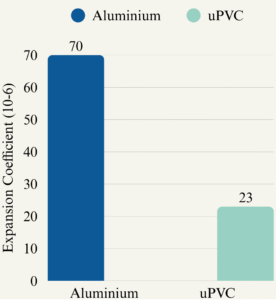
The most important engineering metric for Indian construction is Thermal Expansion. If a material expands too much during a hot afternoon and shrinks at night, the seals break. This leads to dust ingress, water leakage, and air-conditioning loss.
When analyzing System aluminium windows vs UPVC, the data is clear:
- UPVC (Plastic): CTE is approx 70 x 10-6. (High Expansion).
- System Aluminium (Metal): CTE is approx 23 x 10-6. (High Stability).
The Failure Point: A 3-meter wide UPVC sliding door can expand by nearly 9mm in peak summer. This warping jams the rollers and cracks the silicone weather seal. In contrast, 6063-T6 Aluminium Alloy expands less than 3mm, maintaining a perfect airtight lock for decades.
Longevity & Aesthetics: The “Slim” Factor
Modern architecture demands “Minimalism”—large glass spans with minimal framing. This is where the battle of System aluminium windows vs UPVC is won by metal.
The Problem with UPVC Bulk
To support heavy double-glazed units (DGU), UPVC profiles must be bulky (often 60mm-80mm face width) because plastic lacks tensile strength. It relies on a hidden steel rod inside for support, which adds weight without adding visible elegance. Over 10 years, UV radiation turns white UPVC yellow, making the villa look aged.
The System Aluminium Advantage
Using T6-tempered alloy, we can engineer Slimline Sliding Doors with an interlock as thin as 20mm. This allows for 95% glass visibility, offering an unobstructed view of your landscape while supporting panels up to 3.5 meters high. Unlike plastic, our AkzoNobel Powder Coating comes with a 15-year warranty against fading.
Detailed Specification Table
Here is a side-by-side look at System aluminium windows vs UPVC for a standard villa project:
| Parameter | System Aluminium (BSIPL) | UPVC (Retail Brands) |
|---|---|---|
| UV Resistance | Excellent (Powder Coated) | Poor (Discolors/Yellows) |
| Life Span | 20-30 Years | 10-12 Years |
| Max Height | Up to 12 Feet | Max 8 Feet |
| Recyclability | 100% (Green Building) | Non-Biodegradable Plastic |
Conclusion: The ROI Verdict
While UPVC may offer a 15% lower initial cost, the replacement cycle typically begins in Year 10 when the plastic becomes brittle and cracks. System Aluminium windows are a “One-Time Asset.”
When you factor in the 50-year lifecycle and the increase in property valuation due to premium aesthetics, the winner of System aluminium windows vs UPVC is clearly the engineering-grade aluminium.
Building Your Dream Villa?
Don’t let warping plastic ruin your elevation. Experience the strength of 6063-T6 System Aluminium.
