
Powder Coating vs Anodizing for Aluminium: 5 Reasons for NCR Buildings
Technical Analysis by: Building Solutions India Pvt. Ltd. (BSIPL)
Choosing between Powder Coating vs Anodizing for Aluminium is a decision that determines whether your commercial facade will look pristine for 20 years or fade within 24 months. In the extreme climate of the Delhi National Capital Region—characterized by 48°C summers, high UV radiation, and monsoon humidity—the finishing process is as critical as the alloy itself. Following our recent guide on renovating old commercial facades, we now dive into the science of surface protection for 6063-T6 Grade profiles.
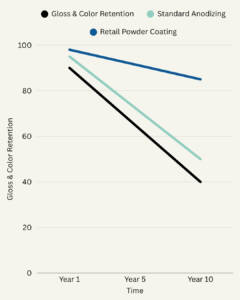
The Engineering Behind Powder Coating vs Anodizing for Aluminium
When evaluating Powder Coating vs Anodizing for Aluminium, it is essential to understand the chemical difference. Anodizing is an electrochemical process that converts the metal surface into a decorative, durable, anodic oxide finish. While it offers a “metallic” look, it is highly susceptible to “alkali attack” in polluted environments like Faridabad or Okhla Industrial Area.
Conversely, Powder Coating involves applying a dry powder—typically polyester or polyurethane—electrostatically and curing it under heat. For projects in Noida Sector 62 and Gurgaon Cyber City, BSIPL recommends a minimum of 60 to 80-micron powder coating. This provides a thick, UV-resistant barrier that shields the underlying aluminum from the corrosive “smog” typical of the NCR winter.
Comparison Table: Performance in the Delhi NCR Climate
| Feature | Anodizing (Traditional) | BSIPL Premium Powder Coating |
|---|---|---|
| Color Consistency | Varies by batch (Metallic only) | Uniform (RAL Shades available) |
| UV Resistance | High, but prone to pitting | Superior (Anti-Fading Tech) |
| Scratch Resistance | Extremely High | High (Flexible coating) |
| Chemical Resistance | Low (Reacts to alkaline rain) | High (Acid/Alkali Resistant) |
| Maintenance | Difficult to repair on-site | Easy to clean and touch up |
Why BSIPL Recommends Powder Coating for Modern Projects
In the debate of Powder Coating vs Anodizing for Aluminium, modern architectural trends favor the former for two primary reasons: Color Versatility and Environmental Resilience. Retail brands often provide standard “Anodized Silver” windows, but these lack the thermal barrier properties required for high-rise efficiency.
At BSIPL, we utilize Pure Polyester Powders from global leaders like AkzoNobel or Jotun. This ensures that the charcoal grey or champagne gold finish you choose for your showroom in South Extension or your corporate office near Pari Chowk stays vibrant. Unlike anodizing, which can show “blooming” (white spots) due to humidity, our powder-coated 6063-T6 Alloy profiles are cured at 200°C to ensure a permanent molecular bond.
Technical Specification: The 2.5 kPa Factor
Surface finishing isn’t just about looks; it impacts structural longevity. When Powder Coating vs Anodizing for Aluminium is discussed for 20th-floor installations on the Yamuna Expressway, we account for 2.5 kPa Wind Loads. A high-quality powder coating adds a layer of flexibility that prevents the micro-cracking often seen in brittle anodized layers during high-stress wind events. We combine this with EPDM gaskets and Dow Corning 995 sealants to create a completely sealed, weather-proof envelope.
Conclusion: Selecting the Right Finish for Your BOQ
For most commercial projects in Delhi NCR, Powder Coating is the superior engineering choice due to its ability to mask minor surface imperfections in the aluminum and its vast range of RAL colors. However, for specialized industrial applications, anodizing may still hold value. At BSIPL, we assist PMCs and Architects in drafting a Bill of Quantities (BOQ) that specifies the exact micron thickness required for their specific micro-climate.
